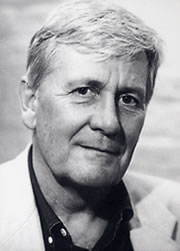
About Colin
Colin Smith, author of ’England’s Last War Against France', ‘Singapore Burning’ and most recently collaborator in Andrew Borowiec's Warsaw Boy,was brought up in the British Midlands where he attended John Willmott Grammar School in Sutton Coldfield. Shortly before his sixteenth birthday he enlisted in the Junior Leaders’ Regiment Royal Signals. But two years later, a kind cousin purchased his discharge from the army when he had the chance to join the Guernsey Evening Press as a cub reporter. (The uncle of an army friend was its editor.) Jobs on several other provincial newspapers followed and in 1968, after working on the Birmingham Post and the Daily Sketch, he joined David Astor’s Observer. He was 23.
In 1972, after adventures in Africa and Ireland, and having seen his first shots fired in anger during the Bengali rebellion in what was then East Pakistan, he was made The Observer’s Chief Roving Reporter and spent the next thirty years covering various trouble spots.
These included the 1973 Middle East war when he was appalled to discover that the initial Israeli confusion on the Golan Heights was such that neither he nor they had noticed his rented Ford Escort had inserted itself among the lead elements of an armoured counter attack; a Khmer Rouge ambush on a South Korean rust bucket trying to crash their blockade along the Mekong during the siege of Phnom Penh; the Turkish invasion of Cyprus; the fall of Saigon where he watched the last American helicopter to leave the roof of the US embassy take off without him and, shortly afterwards, the bulldozing of the gates at the presidential palace by the first North Vietnamese tank; the long Lebanese civil war; the Iranian revolution and the flight of the Shah; the Iran-Iraq war where Saddam’s terrified press minders, determined to prove that the Iraqi army was where it was not, led him far closer to Khomeini’s Revolutionary Guard than either wanted to be; the 1982 Israeli invasion of Lebanon and their siege of West Beirut which he reported from the Palestinian side (which at least prevented him joining the British task force for the Falklands); revolutions in Haiti and Fiji; the First Gulf War where his description of the carnage wrought by American air strikes among Iraqi troops fleeing Kuwait city along the Mutla ridge was published in three anthologies of that conflict; he was in Bosnia for the opening shots of the siege of Sarajevo and spent long periods there before he was posted to Washington DC where he finally parted ways with The Observer following its sale to The Guardian.
Later, for The Sunday Times, he wrote on the terror inspired by Algeria’s Islamic militants, the slaughter in Rwanda, and went to Yemen to report the attack on the USS Cole in Aden harbour. During the Second Gulf War, after considerable speculation that Saddam might renew his Scud rocket attacks against Israel with gas or biological warheads, he was fully kitted out with gas mask and an NBC suit and sent to Jerusalem where, to his great relief, the only action he saw was in the bar of the American Colony Hotel. He was twice named International Reporter of the Year in the British Press Award (1974 and 1984) and was runner-up in 1983. For the 1974 award the judges particularly cited a long, three part series he wrote for The Observer on the abduction and seduction of the Californian heiress Patricia Hearst by the urban terrorists who called themselves the Symbionese Liberation Army .
Smith lives with his wife Sylvia in Nicosia where, in the late 1970’s, he was first based as The Observer’s Middle East correspondent. In more recent years he has concentrated on writing books, both fiction and non-fiction but mostly the same school of narrative history popularised by writers such as Sir Max Hastings, Rick Atkinson and Antony Beevor. In 2009 Weidenfld published his England’s Last War Against France - Fighting Vichy 1940-42 . It tells the story of the bloody land,sea and air conflict between Pétain’s Vichy France, from July 1940 the country’s legitimate government following its crushing defeat by Germany, which began with almost 1300 French sailors being killed in 10 minutes at Mers el-Kebir.
"There the flavour of Waugh's Sword of Honour trilogy in Smith's delight in arcane detail and rumbustious anecdote…a narrative of war that has much of Patrick O'Brian about it,” said Carmen Callil in The Guardian.
His highly acclaimed Singapore Burning, an intensively researched non-fiction account of the campaign the British and the Japanese fought down the length of the Malaya peninsula which culminated in the fall of Singapore in February 1942.
“What a cast. Colin Smith is a fine novelist as well as a historian (he wrote The Last Cruade [now Spies of Jerusalem] a terrific yarn based in Palestine during the First World War) and he knows how to drive the story along,” wrote Patrick Bishop in The Daily Telegraph. “It is beautifully told, shrewd and fair in its judgements and character assessments and on occasions wryly funny. ”
Smith's first book was Carlos - Portrait of a Terrorist, which came out of a three part Observer series following the Venezuelan’s 1976 raid on OPEC’s Vienna headquarters and the kidnapping of the oil ministers. Revised after Carlos’ capture in 1995 and published as a Mandarin Paperback, in 2012, after a Paris court sentenced the terrorist to a second term life imprisonment for bombings in France in the 1980's, it was revised yet again and is sold as a Penguin eBook.
He has pubished three novels, all with Palestinian themes. Spies of Jerusalem is set in the Ottoman Palestine of 1917 as outnumbred Turkish and German forces do their best to thwart Britain's General Allenby as his army advances on Jerusalem; Let Us Do Evil takes place in Mandate Palestine during World War Two where some Jews see the British as their main enemy and make a pact with the Devil; his thriller Collateral Damage sees a vengeful widower on the trail of the man who killed his wife as the Cold War terrorism that plagued Western European capitals in the 1970's becomes a very hot war indeed in Beirut and southern Lebanon.
|